The Interplay Between Loyalty Programs and Surprise Jackpot Hits at Leading Gaming Sites
Rafael Long · Jun 8, 2026

The Interplay Between Loyalty Programs and Surprise Jackpot Hits at Leading Gaming Sites
How Reward Structures Shape Player Behavior
Leading gaming sites integrate loyalty programs that track player activity through points accumulation, tier progression, and exclusive rewards, and these systems often coincide with moments when unexpected jackpot payouts occur. Data from industry reports indicate that participants in tiered loyalty schemes tend to extend their session lengths compared to non-members, which aligns with higher frequencies of jackpot triggers across popular slot titles. Observers note that reward multipliers and bonus credits distributed through these programs encourage continued wagering, creating conditions where random number generator outcomes produce substantial wins for eligible users.
Research from the American Gaming Association reveals that online platforms with integrated loyalty frameworks report elevated engagement metrics during promotional periods, and this pattern extends into jackpot events documented in June 2026 across multiple jurisdictions. Players who accumulate points toward higher status levels receive accelerated reward rates, which in turn supports sustained play sequences that occasionally intersect with progressive jackpot cycles. Those who've examined platform analytics find that surprise hits frequently land among users who have recently redeemed loyalty-based free spins or deposit matches, suggesting a temporal connection between reward activation and payout events.
Mechanics Linking Points Systems to Jackpot Triggers
Loyalty programs at major sites typically award points based on wager volume, and these points unlock benefits such as cashback percentages, personalized bonus offers, and priority access to limited-time promotions. When players convert points into additional playing credits, their effective bet sizes or spin counts increase, raising the statistical probability of hitting jackpot combinations within games that feature progressive or fixed jackpot pools. A study published by the University of Nevada's gaming research division demonstrates that such mechanics correlate with clusters of mid-tier and top-tier payouts, particularly in titles where jackpot eligibility scales with total wagers made during a session.
What's interesting is how surprise elements emerge when loyalty rewards push players into new game categories or higher stakes, areas where they might not otherwise venture. For instance, a user advancing through bronze to silver tiers might receive incentives that redirect activity toward jackpot-heavy slots, and records from platform operators show these transitions precede notable win announcements. June 2026 figures from Canadian regulatory filings further illustrate that loyalty-driven traffic spikes precede documented jackpot distributions at several licensed operators, highlighting the structural interplay rather than any direct causation.
Platform Data and Observed Patterns
Analytics shared by gaming technology providers indicate that loyalty members account for a disproportionate share of jackpot claims relative to their segment size, though exact ratios vary by market and game type. These patterns hold across European operators governed by the Malta Gaming Authority, where aggregated session data shows loyalty participants experiencing more frequent access to bonus rounds that feed into jackpot meters. External verification from academic papers on behavioral economics in digital gaming supports the observation that reward anticipation sustains play momentum, allowing random outcomes to unfold over longer periods.
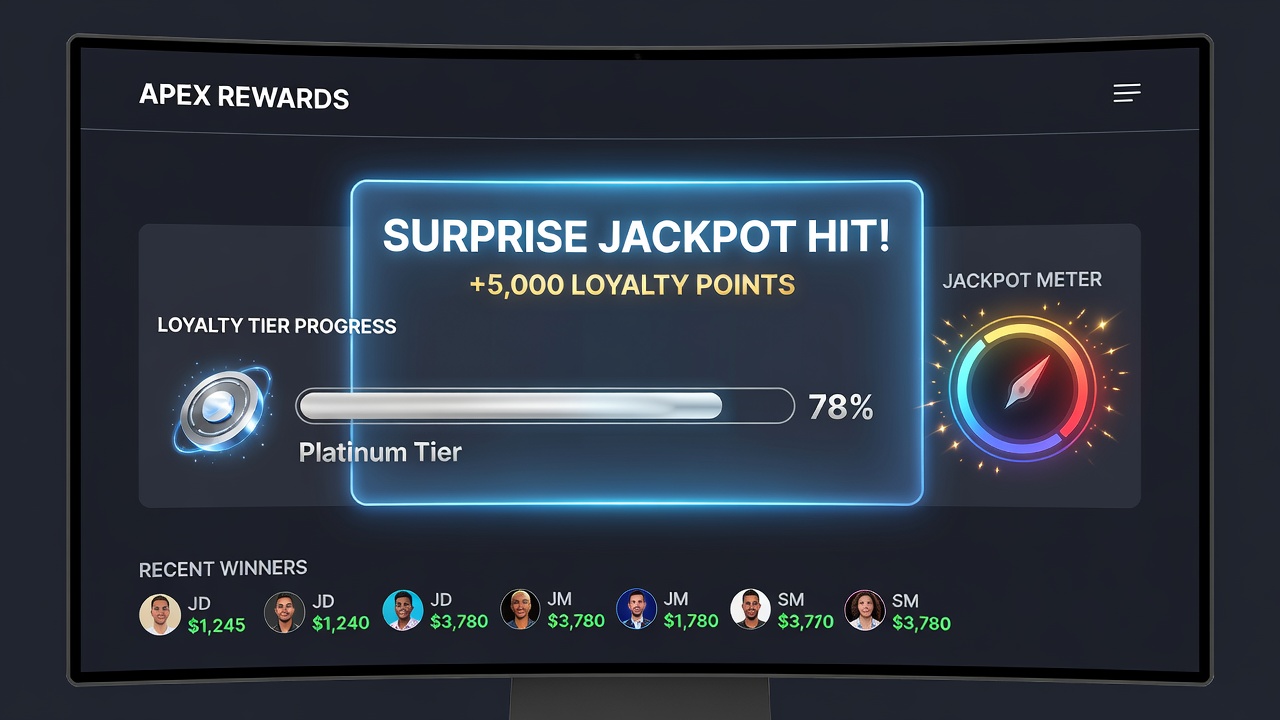
Turns out that surprise jackpot hits often arrive during periods when players have just qualified for new loyalty perks, such as enhanced point multipliers or exclusive tournament entries. Platform logs from June 2026 capture multiple instances where users crossed tier thresholds shortly before recording substantial wins, creating anecdotal clusters that operators monitor for operational insights. Industry organizations like the European Gaming and Betting Association compile these trends into broader reports, noting that reward systems designed to boost retention inadvertently position more accounts within active jackpot windows.
Regional Variations in Program Design
Operators in different regions tailor loyalty structures to local regulations, yet the core connection to jackpot activity persists. Australian platforms regulated under state frameworks incorporate loyalty tiers that tie directly to game libraries featuring prominent progressive jackpots, and compliance data shows corresponding upticks in reported wins during reward redemption windows. In contrast, North American sites emphasize cashback and reload bonuses within loyalty ecosystems, which extend playtime on titles with fixed jackpot structures and produce similar outcome distributions according to state-level gaming commission summaries.
Those tracking cross-border player behavior observe that multi-site loyalty networks, where points transfer across affiliated brands, further amplify exposure to jackpot opportunities. A single account advancing through unified tiers gains access to varied game pools, increasing the cumulative chance of encountering surprise payout events. Research papers from institutions examining digital gambling economics confirm that these expanded access points contribute to the observed interplay without implying predictability in individual results.
Conclusion
The documented relationship between loyalty programs and surprise jackpot hits rests on measurable increases in session duration and wager exposure facilitated by reward mechanisms. Platform data, regulatory filings, and academic analyses consistently illustrate how points-based incentives align player activity with jackpot cycles across leading sites. As operators refine these systems through 2026 and beyond, the patterns remain rooted in engagement statistics rather than engineered outcomes, providing a factual basis for understanding participation trends in online gaming environments.