Algorithmic Adjustments: Tracking Software Updates' Effects on Video Poker Jackpot Rates
Viktor Günther · Jun 29, 2026

Algorithmic Adjustments: Tracking Software Updates' Effects on Video Poker Jackpot Rates
Video poker platforms rely on complex algorithms that determine jackpot frequencies, and software updates can modify those calculations in measurable ways across different gaming systems. Developers release patches to adjust random number generators, payout tables, and bonus triggers, while regulatory bodies require verification that changes maintain compliance standards. Research from gaming laboratories shows that even minor code revisions alter hit rates for progressive jackpots, sometimes increasing or decreasing player return percentages by fractions that accumulate over millions of hands.
Core Mechanisms Behind Update Impacts
Random number generators sit at the center of video poker operations, and updates often recalibrate seed values or cycle lengths to address security vulnerabilities or performance issues. When providers such as IGT or Aristocrat push new versions, the revised RNG sequences can shift the distribution of royal flush combinations and other high-value outcomes. Observers note that platforms using older server-based systems experience more pronounced changes after updates because legacy code interacts differently with fresh modules, whereas cloud-hosted environments distribute adjustments more evenly across connected terminals.
Testing protocols established by independent labs confirm these shifts before deployment. Data from certification reports indicate that jackpot frequency adjustments typically stay within predefined tolerance bands, yet real-world deployment across multiple casino floors reveals slight variances tied to hardware differences and network latency. Those who've examined post-update logs find that progressive jackpot meters sometimes accelerate or stall depending on how the software recalculates contribution rates from each bet.
Platform-Specific Variations in June 2026
By June 2026, several major operators had completed phased rollouts of updated video poker libraries that incorporated enhanced encryption alongside revised bonus structures. One multi-state network reported that its updated Deuces Wild titles displayed a measurable uptick in four-of-a-kind frequencies after the May patch cycle, while Jacks or Better variants on the same system showed no statistically significant deviation. Analysts attribute these differences to the distinct paytable algorithms embedded in each game family and the order in which modules were recompiled during the update process.
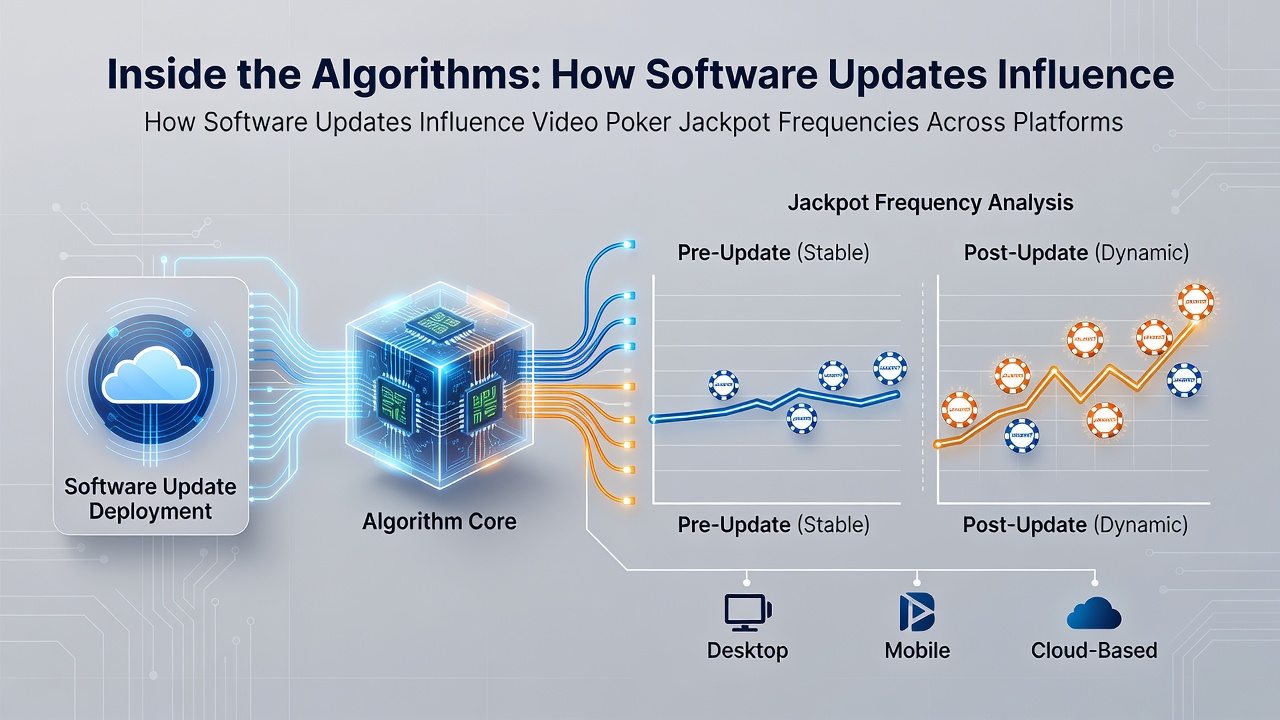
Cross-platform comparisons further illustrate how the same core update produces divergent results. A study released by the University of Nevada, Reno gaming research group tracked identical software versions running on both standalone cabinets and networked progressive systems. The findings revealed that jackpot trigger intervals shortened on networked machines because pooled contribution calculations interacted with the new RNG timing, whereas standalone units retained their prior frequency patterns until individual terminals received the full update sequence.
Regulatory Oversight and Verification Processes
Regulatory agencies in multiple jurisdictions mandate pre-approval for any software change that affects payout percentages or jackpot mechanics. The Nevada Gaming Control Board requires submission of updated source code and simulation results demonstrating that revised jackpot frequencies remain within approved ranges. Similar requirements exist through the Alcohol and Gaming Commission of Ontario, which evaluates both the mathematical integrity and the practical implementation of updates across deployed terminals. These reviews help ensure consistency even when operators manage thousands of machines simultaneously.
Industry reports compiled by the American Gaming Association document that update-related jackpot adjustments occur most frequently during scheduled maintenance windows, minimizing disruption to ongoing play. Technicians monitor meter readings before and after each deployment to verify that progressive amounts accumulate correctly under the revised algorithms. Discrepancies, when detected, trigger rollback procedures that restore earlier versions until the issue receives resolution.
Long-Term Patterns Across Multiple Jurisdictions
Longitudinal data collected over several update cycles shows that jackpot frequency tends to stabilize within weeks of deployment once player behavior and machine utilization return to baseline levels. Yet platforms that introduce multiple incremental patches within a short period sometimes experience cumulative effects that only surface after extended operation. Researchers tracking these patterns emphasize the importance of maintaining detailed version histories so that any deviation can be traced to specific code changes rather than external factors such as floor traffic or promotional events.
Operators also coordinate with game manufacturers to schedule updates during periods of lower volume, allowing time for thorough validation. This approach reduces the likelihood that an unintended shift in jackpot frequency reaches players before detection. Figures released by gaming laboratories confirm that the majority of updates produce changes smaller than one-tenth of one percent in overall return-to-player metrics, though individual jackpot categories can experience more noticeable movement.
Conclusion
Software updates continue to serve as the primary mechanism through which video poker platforms refine jackpot frequencies while maintaining regulatory compliance. The interaction between revised algorithms, hardware configurations, and network structures produces measurable differences across systems, and verification processes established by oversight bodies help keep those differences within approved parameters. Ongoing monitoring and detailed record-keeping enable operators and regulators to identify and address any unintended consequences promptly, ensuring that video poker remains consistent for players regardless of platform or location.